
Plan around the calendar
French holidays, school dates & best times to visit
France runs on a fixed calendar of national holidays and three school holiday zones. Knowing the dates helps you avoid motorway queues, secure better rates, and catch festivals at their best.
National public holidays in France
Most shops, banks and public services close on these days. Museums and restaurants often stay open, but supermarkets and many attractions may have reduced hours.
- New Year's Day1 JanuaryJour de l'An
- Easter MondayMarch/AprilLundi de Pâques
- Labour Day1 MayFête du Travail
- VE Day8 MayFête de la Victoire
- Ascension ThursdayMayAscension — often a long weekend
- Whit MondayMay/JuneLundi de Pentecôte
- Bastille Day14 JulyFête nationale — fireworks and parades
- Assumption15 AugustAssomption — peak summer travel
- All Saints' Day1 NovemberToussaint
- Armistice Day11 NovemberArmistice 1918
- Christmas Day25 DecemberNoël
French school holiday zones
School holidays are staggered by zone to spread pressure on ski resorts and roads. The country is split into three zones: A, B and C.
Zone A
Besançon, Bordeaux, Clermont-Ferrand, Dijon, Grenoble, Limoges, Lyon, Poitiers
Usually the first zone to start mid-term and winter breaks; Easter break last.
Zone B
Aix-Marseille, Amiens, Caen, Lille, Nancy-Metz, Nantes, Nice, Orléans-Tours, Reims, Rennes, Rouen, Strasbourg
Mid-position for most school holidays.
Zone C
Paris, Créteil, Versailles, Montpellier, Toulouse
Usually the last zone to start winter and Easter breaks; the busiest in Paris and the south-west.
Best and busiest times to visit France
France is rewarding year-round, but the calendar changes prices, crowds and what is open. Here is how to choose your window.
Spring — April to June
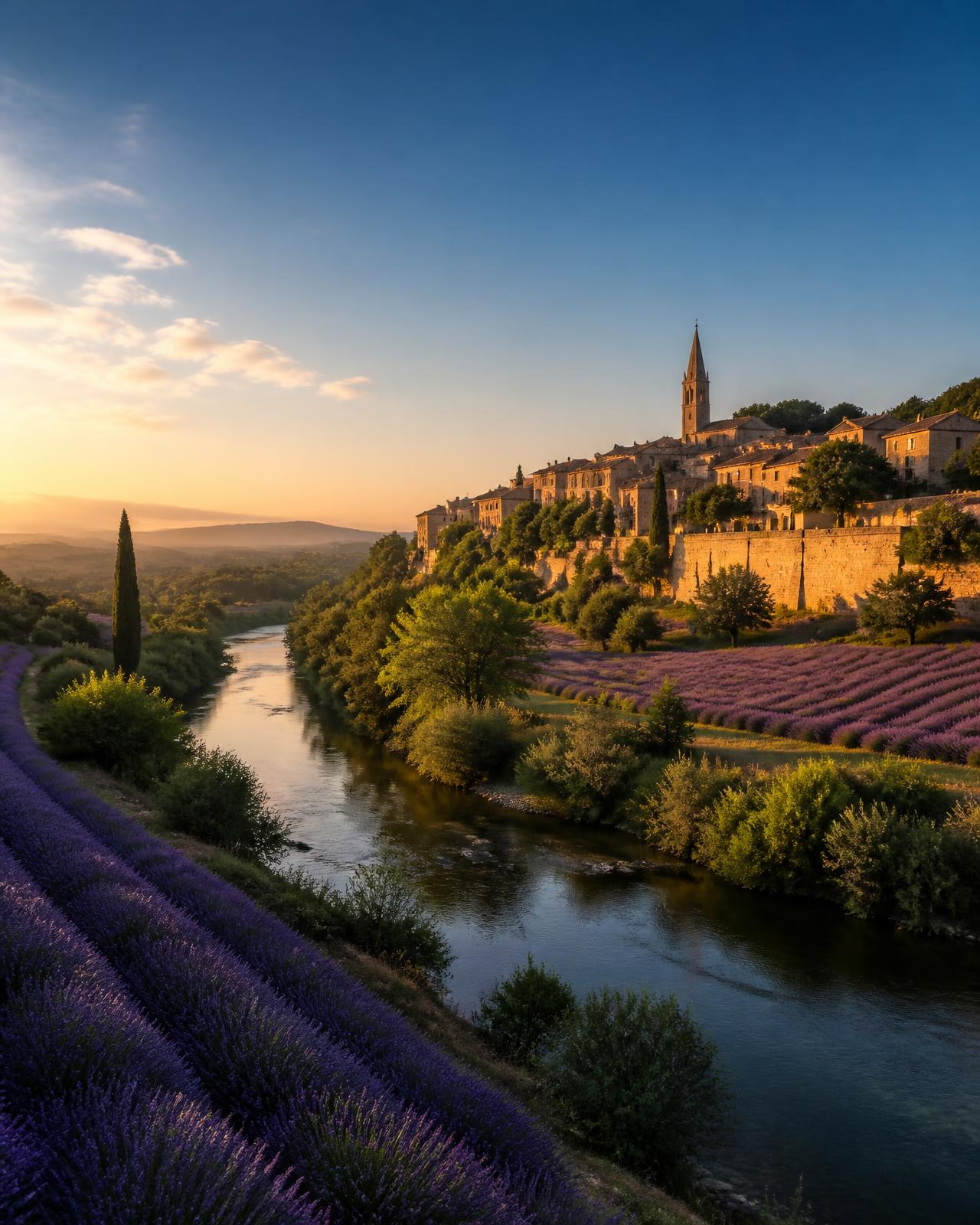
Mild weather, fewer crowds, open gardens and lower rates. Lavender and sunflower fields start in late June. Ideal for city breaks and countryside touring.
Summer — July to August
Warmest weather, long evenings, festivals and full beach life. Prices peak and roads are busy, especially 1–15 August and around Bastille Day. Book early.
Autumn — September to November
Harvest season, wine tastings, comfortable temperatures and quieter museums. The Toussaint holiday brings a short spike in family travel.
Winter — December to March
Christmas markets, Alps skiing and Pyrenees snow. City breaks are atmospheric; coastal areas are much quieter but still mild in the south.
Major events and festivals
France packs its calendar with events. These are the ones worth planning around, in either direction.
Tour de France
July — the world's biggest cycling race crosses the country and often closes mountain roads for a day.
Cannes Film Festival
May — the Riviera is busy and glamorous; accommodation books out months ahead.
Bastille Day
14 July — fireworks, parades and parties in every town. Book dinner and hotels well ahead.
Christmas markets
Late November to December — Strasbourg, Colmar, Lille and Lyon are among the best.
Monaco Grand Prix
Late May — the Côte d'Azur is packed; road access around Monaco is restricted.
Smart travel tips
How to avoid the holiday crowds
- Book accommodation at least 2–3 months ahead for July, August and Easter.
- Avoid the first and last weekends of school holidays for long drives; motorways are worst on Saturdays.
- Many small shops and bakeries close in August, especially in Paris and small towns.
- Public holiday Mondays create long weekends; book restaurants and attractions early.
- Off-season travel in May, June and September offers the best balance of weather and value.
HexaRêve holiday dates and school zone schedules can change. Check official French government sources before booking travel around fixed dates.
Keep exploring
All tours & activities
The full catalogue, filterable by type, city and price.
ExploreChâteaux, villas & apartments
Private stays with housekeeping, chef and driver add-ons.
ExploreDriving to France
Routes, road rules, tolls and emissions stickers from the UK, Ireland and EU.
ExploreFerries to France
Channel, Irish and western France crossings compared.
ExploreTrains to France
Eurostar, TGV and European rail routes compared.
ExploreCampsites & glamping
Coastal, vineyard and mountain campsites across France.
ExploreDestinations
Paris, Provence, the Alps and the coast.
ExploreTalk to a trip planner
Tell us your dates — we reply within a few hours.
Explore